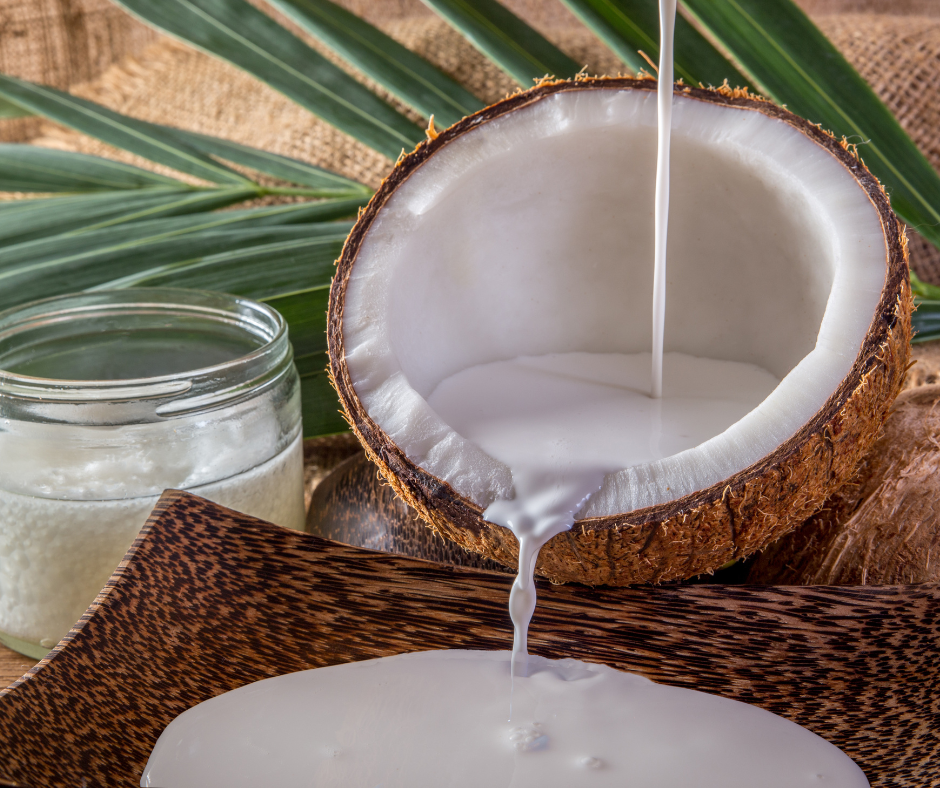
You know me, and you know that I’m a little bit nutty at baseline, so this topic is absolutely perfect for me! Let’s talk coconut oil and MCT oil: two powerhouse fats that are as beneficial as they are misunderstood. From skin issues to brain health, these healthy oils offer a lot more than just tropical vibes, trust me. Let’s wade into what makes these oils special, the difference between them, and how to choose one that actually delivers the health boost you’re hoping for.
First, What Are Coconut Oil and MCT Oil?
At a glance, they seem similar — both are derived from coconuts, both contain medium-chain triglycerides (MCTs), and both are rich in saturated fats, which aren’t the demons we’ve made them out to be. But dig a little deeper and you’ll find important differences..
- Virgin Coconut Oil is made by pressing fresh coconut meat, ideally within hours of harvest, without heat (a method called wet-milling). It retains a wide range of beneficial compounds — especially lauric acid.
- MCT Oil is a concentrated version of the medium-chain fats found in coconut oil. It’s usually extracted to include only certain MCTs, often caprylic acid and capric acid — and sometimes lauric acid, though many formulas remove it.
Let’s Talk MCTs: Lauric, Capric, and Caprylic Acids
These three fatty acids each come with their own set of superpowers:
🥥 Lauric Acid
This one’s the heavyweight. Lauric acid is what makes coconut oil coconut oil. It’s a strong antibacterial, antiviral, and antifungal agent. It also converts more slowly to ketones than other MCTs, which means it provides longer-lasting energy — particularly valuable for brain and cognitive health.
Think of it as the steady, reliable friend who brings you a latte and then goes on an adventure to Target that lasts for hours (we all know you can’t get in and out of Target in less than 60 minutes)!
⚡ Capric Acid
Capric acid is known for quick energy production and has mild antimicrobial properties. It’s converted into ketones faster than lauric acid but doesn’t stick around as long.
It’s like your friend who shows up with espresso, gets you pumped for a 30 minute HIIT class, then vanishes.
🚀 Caprylic Acid
Caprylic acid is the fastest-acting of the MCTs and packs a potent anti-yeast punch — perfect for tackling candida overgrowth, yeasty paws, or chronic ear infections. It’s highly effective for gut health and energy, but like capric acid, it burns off quickly.
This one’s your get-stuff-done-now buddy. No lingering, just action before they disappear.
So you can see that each of these fatty acids have unique and beneficial properties, but how do you choose which one you want to incorporate into the diet?
Coconut Oil vs. MCT Oil: Which One Should I Use?
Here’s a simple cheat sheet, which isn’t all encompassing but works as a great start:
| Condition | Best Choice |
|---|---|
| Brain health / Seizures / Cognitive issues | Coconut oil (for longer ketone production) |
| Digestive support / Yeast overgrowth | MCT oil (especially rich in caprylic acid) |
| Pancreatitis or lipid-sensitive pets | MCT oil (easier to digest, no bile or pancreatic enzymes required) |
| Everyday maintenance & immunity | Coconut oil (hello, lauric acid!) |
Better yet, alternate them — MCT in the morning for quick energy, coconut oil at night for brain fuel that lasts through sleep. Genius, right?
Is It Safe for My Pet?
Yes — when you start slow and choose the right product.
Pets can sometimes be sensitive to fats if they already have a stressed Gi tract or have been only kibble fed for a long time, so consider beginning with:
- Coconut oil: 1 tsp per 10 lbs of body weight (start smaller and work up)
- MCT oil: ½ tsp per 10 lbs of body weight (because it’s concentrated!)
Watch for signs like loose stool or oily coats, and adjust as needed. And remember — this is food, not a pharmaceutical. You’re not “dosing,” you’re feeding! And as a food, it’s pretty damn super with a ton of benefits.
Coconut Oil Is More Than Just a Food
This stuff is a first-aid kit in a jar. Use it:
- Topically for wounds, cuts, burns, yeast infections, dry noses, and hotspots.
- For dental health — brush their teeth with it (many pets love the taste!).
- As pest protection — rub into paws, ears, and underbellies to deter fleas and ticks.
- In the ears for mild infections or gunk buildup (a very thin layer will do).
- For constipation or hairballs — especially in cats (also great: coconut flakes or chips).
And what’s even more excellent is that all of these benefits apply to you as well! One additional way I use coconut oil or MCT oil for myself is by oil pulling- I take a capful of MCT oil and swish it around my mouth, then spit and rinse my mouth before spitting again. This helps regulate the oral microbiome gently and can help pull toxins and rebalance pH. If you decide to oil pull, start slow with a minute or two and work yourself up to 10 or more minutes if you can. I currently oil pull during my shower, which lasts between 10-15 minutes- once you get used to it, it becomes a easy habit to continue!
Choosing a Clean, High-Quality Product
Here’s where things get serious, and I hope you know me well enough by now to know that quality and transparence are my top priorities when it comes to making choices for myself and my pets. Coconut oil is a bit of a “Wild West” in the supplement world. Labels say things like “raw,” “cold-pressed,” or “extra virgin” — most of which are unregulated and meaningless in the coconut industry.
👉 Look for:
- Certified organic
- Non-GMO verified
- Sourced and produced on the same farm
- Wet-milled or cold-pressed, not expeller-pressed
- Not deodorized, refined, or bleached
- Fresh coconut smell — not neutral or plasticky
Avoid oils that are odorless or tasteless — they’ve likely been deodorized or processed with heat or solvents, stripping them of their nutrients. Plus that means you’re ingesting chemicals- yuck.
🛑 Big tubs from warehouse clubs? Probably not your best bet for therapeutic use. Not only are they going to go rancid and get oxidized faster than you can use them, they’re also not going to be top quality from a sourcing or manufacturing standpoint.
The ideal product should come from a transparent, family-owned source (like cocotherapy!), where the coconuts are grown, harvested, and processed with integrity — and without shortcuts. Here are a few of my favorites from cocotherapy…
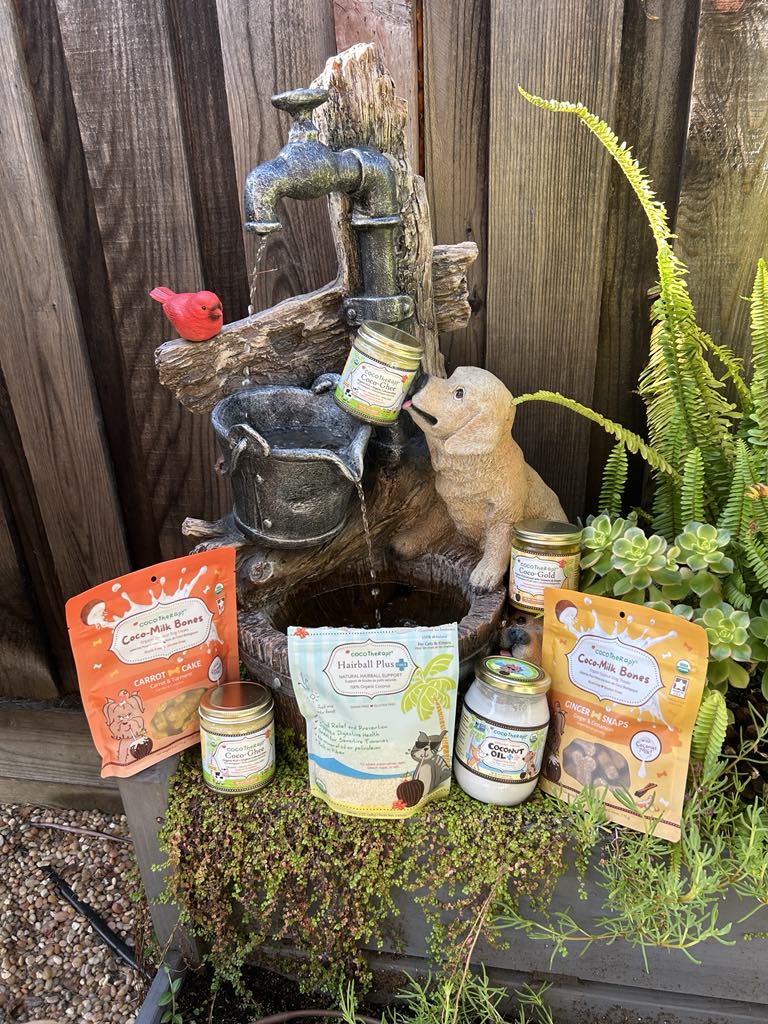
- Coconut oil — mix into toothpaste, use for yeasty ears and paws, hot spots, and for cooking
- MCT oil — my go-to for oil pulling & a quick energy boost
- Coco Ghee — my absolute favorite for cooking eggs, mushrooms and other veggies
- Coco Gold — for cooking and adding to my dogs’ meal prep
- Coconut flakes — I sprinkle these in the dish for my cats and I add them to my chia seed yogurt!
- Coconut treats — the dogs love them and they’re great for training and hiking snacks
- Coconut husk toys — my kitties enjoy playing with the different toys cocotherapy makes from coconut husks which are all natural and non toxic!
Nature Knows Best
Coconut oil and MCT oil aren’t just trendy health fads. They’re time-tested, nutrient-dense, metabolically clean fuels that support your pet’s body at the cellular level. Whether you’re battling inflammation, helping an aging pet stay sharp, or just boosting daily vitality — these oils offer a gentle, holistic path forward. For more information on coconut oil benefits and to hear it all from the experts, please check out the amazing E-book from cocotherapy as well as my podcast episode where I had the amazing Carmina and Charisa, the founders and formulators of cocotherapy, on as guests!